
Custom Plush Development
How to Choose a Custom Plush Toy Manufacturer: A Buyer’s Guide
A practical guide for brands and sourcing teams evaluating a custom plush toy manufacturer—from sampling and production readiness to quality control and supplier documents.
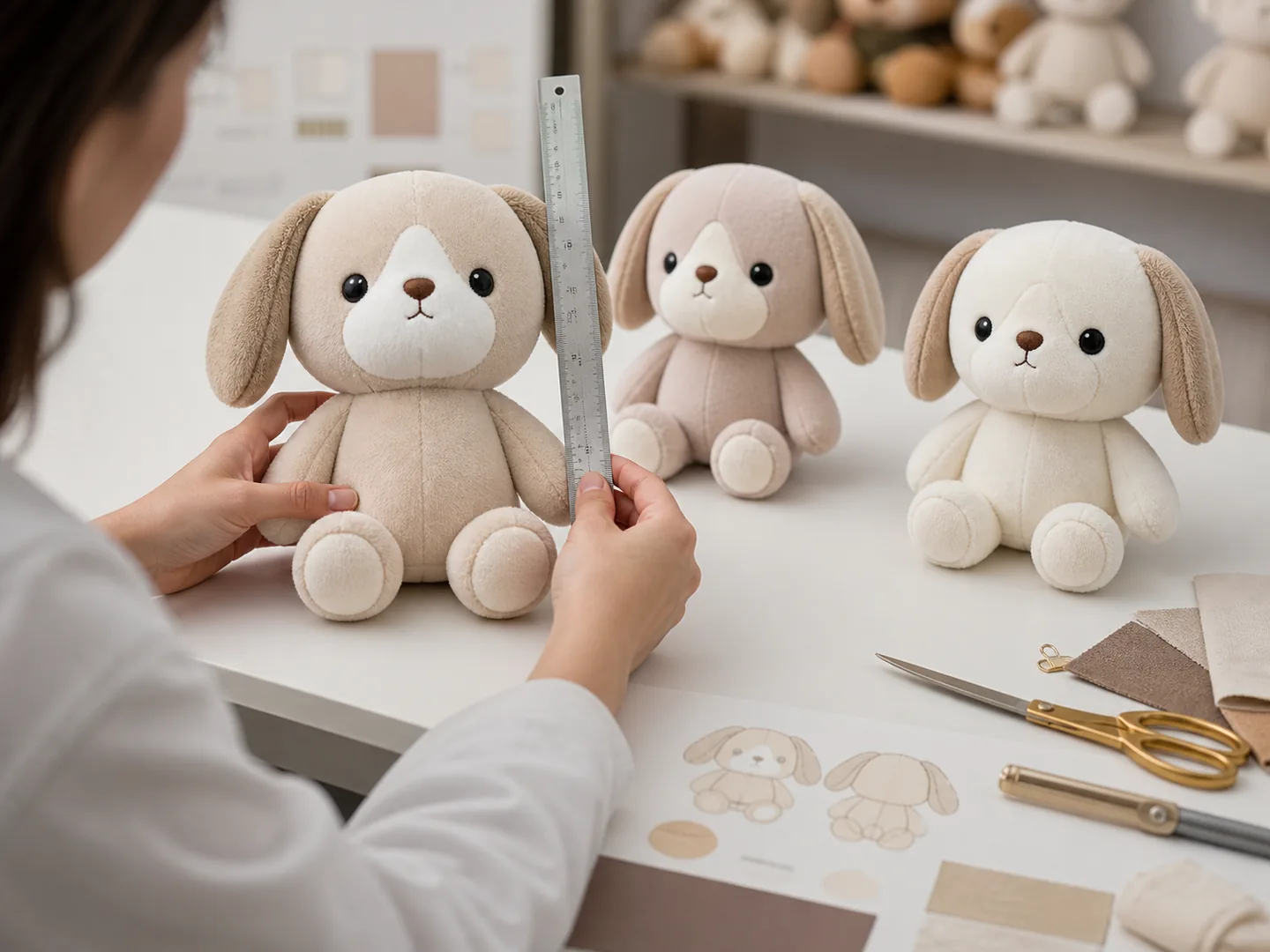
Choosing a custom plush toy manufacturer is not simply a matter of comparing quotations. A supplier may be able to make one attractive sample, but a commercial project also depends on repeatable construction, controlled revisions, clear communication and a production plan that protects the approved design.
This guide is written for brand owners, IP teams, retailers, gift companies and sourcing professionals who need to turn artwork, a character concept or a reference product into a reviewable sample and, eventually, a production order. It explains what to check before you shortlist a factory and what information will help a manufacturer assess your project properly.
1. Begin with product fit, not factory size
“Plush toy” covers many different constructions. A small plush keychain, a large mascot, a sitting character, a long-pile animal and a vinyl-face plush product do not require the same pattern work, materials or assembly experience. Start by asking whether the manufacturer regularly develops products that are structurally close to your idea.
Share the intended size, use case, target market and any important features. If a character must stand, sit, hold an accessory, wear removable clothes or contain an interactive module, those requirements should be discussed before sampling. A capable supplier will identify the details that affect structure rather than treating every project as the same basic stuffed toy.
2. Review how the factory controls a sample
A good custom sample should translate the visual identity of a character into a physical product. That means more than matching the main color. Proportions, face placement, embroidery, pile direction, hand feel, firmness and the relationship between individual parts all influence whether the finished toy feels recognisable.
Ask how comments are recorded and consolidated. Scattered feedback in multiple chats can easily create contradictory revisions. A clearer process uses one revision list, marked images where helpful and an approved sample or specification as the production reference. This reduces avoidable interpretation later.
3. Separate appearance approval from production readiness
A sample can look good and still need engineering work before production. Seams may need reinforcement, small accessories may need a different attachment method, fabric direction may need to be standardised, and certain details may need to be adjusted so they can be repeated consistently.
When evaluating a manufacturer, ask what happens between sample approval and production. The answer should cover confirmed materials, key dimensions, embroidery or print files, accessory placement, stuffing and firmness references, packaging requirements and inspection points. This is where product development becomes production management.
4. Ask how quality is checked against the approved reference
Quality control for character products is not limited to checking whether a seam is closed. The factory should also understand which visual details matter most to the character: eye position, facial balance, ear angle, silhouette, color relationship and overall expression.
Before production, agree on the reference sample and the points that must remain stable. During production, material confirmation, first-piece review, in-process checks and final inspection can be aligned to the project. The exact inspection arrangement depends on the product and order, but the standard should be discussed before goods are completed.
5. Verify supplier documents for your market and project
Different markets, retailers and product categories may require different test reports, social-compliance documents or factory qualifications. Do not rely only on a list of certification names on a website. Ask for current documents when the project reaches supplier qualification, and check the holder, scope and validity.
MofuDream can support the review of relevant factory qualification or audit materials connected with ISO 9001, ICTI, BSCI and FAMA during supplier qualification. Product testing and documentation should still be confirmed against the destination market, age grade, materials, product design and the buyer’s own requirements.
6. Evaluate communication and project handoff
Many delays begin with missing information rather than production itself. A useful manufacturing partner should tell you what is still unclear, confirm decisions in writing and separate approved requirements from open questions. You should know who is coordinating the sample, who consolidates changes and what must be approved before the next step.
For overseas projects, also clarify the commercial handoff. MofuDream generally coordinates domestic delivery to an agreed location in China, a port-side partner or a nominated trading company. Export arrangements can then be aligned with the buyer’s selected partner and project structure.
7. Send a brief that a manufacturer can actually assess
You do not need a complete technical pack to start a conversation, but a useful first inquiry should include:
- character artwork, reference images, a physical sample or 3D views;
- intended product type and approximate size;
- target market and use case, such as retail, gifts, licensing or promotion;
- expected quantity range;
- important materials, accessories, packaging or functional requirements;
- the required delivery window and domestic handoff point;
- any testing, audit or documentation requirements already known.
A structured brief allows the supplier to identify risks early and ask focused questions. It also makes quotations from different manufacturers easier to compare because they are responding to the same project scope.
What MofuDream brings to a custom plush project
MofuDream is based in Dongguan, China, and brings together toy manufacturing experience since 2007, high-fidelity sampling, structural and process optimisation, production cost control and coordinated production management. We work with brands, IP owners, retailers, gift companies, cultural organisations and product teams developing traditional plush products as well as selected AI-interactive plush concepts.
Our own character-product work gives us an additional buyer’s perspective: a product must not only be manufacturable, but also look convincing, feel right in the hand, present well in packaging and remain recognisable when produced at scale.
You can review our custom plush OEM/ODM capabilities, read the MofuDream company and supplier-qualification overview, or browse our product capabilities.
Frequently asked questions
Can I inquire with only a character image?
Yes. A clear front view and additional angles or references are helpful, but the first discussion can begin with a character image, target size, intended use and quantity range. The manufacturer can then identify what information is still required for sampling.
Should I choose the lowest sample price?
Sample price alone does not show whether a supplier understands the character, manages revisions clearly or can protect the approved details in production. Compare the development process, the questions asked and the production plan—not only the first number quoted.
When should compliance requirements be discussed?
As early as possible. Destination market, age grade, materials and product construction can affect testing and documentation. Early alignment helps avoid redesign or material changes after the sample is approved.
How do I start a project with MofuDream?
Send your artwork or reference, product type, approximate size, quantity range, target market and delivery requirements through our project inquiry page. We will review the brief and reply with the questions needed for the next step.