
Custom Plush Development
Custom Plush Toy MOQ, Sampling and Lead Time: Plan a Realistic First Order
A practical B2B guide to planning custom plush MOQ, sampling, approvals and lead time before requesting a quotation or fixing a launch date.
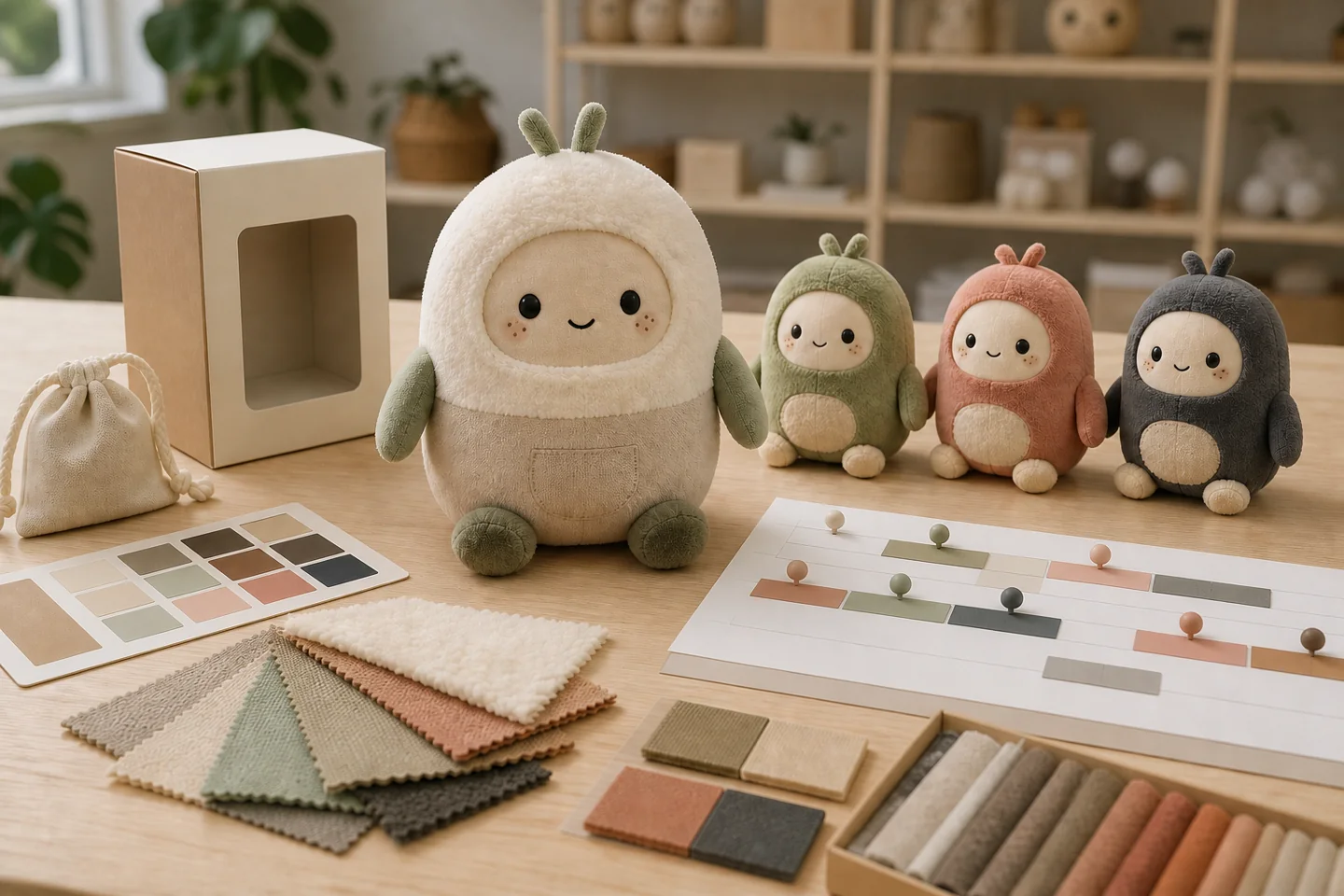
Custom plush toy MOQ, sampling and lead time cannot be separated from the product you want to make. A single simple character, a collection with several colorways and a launch that needs retail packaging are three different production plans. The most useful first answer is therefore not one universal number. It is a clear explanation of which decisions shape the minimum quantity, how the sample will be approved and what must happen before production can begin.
For a realistic quotation, prepare your artwork, intended finished size, estimated quantity range, number of designs or colors, target market, packaging idea and desired delivery window. These inputs let a manufacturer evaluate feasibility instead of sending a preliminary estimate that changes later.
1. Start by separating a sample, a first production run and a reorder
A physical sample proves the design can become a three-dimensional product. It does not mean the same quantity rules apply to bulk production. A first production run includes material planning, production setup, packaging coordination and quality references. A reorder can be more predictable when the approved design, materials and packaging remain unchanged.
Ask the supplier to label each stage clearly. Buyers should know what is being sampled, what approval releases production and which assumptions apply only to a repeat order.
2. What actually shapes a custom plush toy MOQ
MOQ is influenced by more than factory capacity. The number of designs, colorways and sizes changes how material and production setup are divided. A custom fabric color, special embroidery, molded component, electronic module or unusual package may introduce a separate supplier minimum. Small items can still be complex if the character contains many tiny parts.
This is why two plush toys of the same height can receive different quantity recommendations. A useful MOQ discussion identifies the constraint instead of presenting one number as a rule for every project.
3. Choose a first-order structure that matches the business goal
A brand testing one new character may benefit from one lead SKU with tightly controlled specifications. A licensed collection may need several characters at the same time, but should confirm whether materials and packaging can be shared. A campaign with a fixed event date must prioritize approval speed and transport planning over adding late variants.
Before asking for the lowest possible quantity, decide what the first order must prove: product demand, retail presentation, character acceptance or a repeatable supply route. The order structure should answer that business question.
4. Prepare the quotation brief before discussing timing
- Clear front artwork, plus side and back references if available.
- Target finished size and intended use: retail plush, gift, mascot or bag charm.
- Quantity range for each design, color and size.
- Target country or region and intended age group.
- Packaging, labels, hangtags and barcode requirements.
- Desired delivery window, launch date and destination.
- One person responsible for consolidated sample feedback.
If information is still open, mark it as a decision to be confirmed. An honest range is more useful than a precise figure built on missing specifications.
5. Understand the sampling path
Sampling normally moves from design review to pattern development, material selection, sewing, stuffing, embroidery or print, finishing and buyer review. The first sample should answer the largest structural questions before the team spends time on tiny decorative changes.
Review silhouette and proportion first, then face and expression, then fabric and color, and finally accessories, labels and packaging. Record each approved decision with marked photographs or a written sample sheet so later feedback does not reopen settled points.
6. Build the lead time from stages, not from one headline number
A complete project can include brief confirmation, first sample, buyer review, revision, final approval, material preparation, production, inspection, packing and transport. Safety or retailer testing may add another sequence. Some stages can overlap; others cannot start until the approved sample or packaging file is locked.
Ask for a milestone plan with responsibilities. The factory controls sampling and production work, while the buyer controls artwork decisions, feedback speed, approval and destination information. A date is credible only when both sides understand those dependencies.
7. Plan backwards from the required delivery date
Begin with the date the goods must be available at the final destination, not the day production should finish. Reserve time for transport, customs or warehouse intake, inspection, packing, production, material preparation and sample approval. If the launch cannot move, identify the last safe approval date and freeze unnecessary additions before it.
For events, crowdfunding rewards or retailer programs, add a decision buffer rather than assuming every review will be completed immediately.
8. Reduce avoidable delays during sample approval
Multiple reviewers often create more delay than the sewing itself. Nominate one decision owner, collect comments into one marked document and rank changes as essential, preferred or optional. Compare every round against the same artwork and approved dimensions.
Avoid adding a new accessory, package or color after the final sample has been approved. A late change may affect materials, balance, labels, testing or packing, so it should be assessed as a schedule change rather than treated as a free edit.
9. Common planning mistakes
- Comparing MOQ without confirming whether the quotation covers one design or several SKUs.
- Counting sewing time but forgetting buyer review, testing, packaging and transport.
- Approving the sample in chat messages without one final reference.
- Choosing packaging after production has started.
- Using a launch date as a request without stating the delivery destination.
- Assuming a reorder timeline applies to a first-time product.
10. How MofuDream evaluates a first order
MofuDream reviews the design, intended product, quantity range, market, packaging and timing as one project. The aim is to identify the decisions that control feasibility, prepare a sample route and establish a production reference before bulk work begins.
Explore our custom plush development capabilities and take a virtual look at our plush toy factory. For supplier evaluation, read how to choose a custom plush toy manufacturer. To manage revisions, see our guide to custom plush samples and bulk-production consistency. If your project begins with character art, read how to turn a drawing into a product-ready plush line.
Frequently asked questions
What is the minimum order quantity for a custom plush toy?
There is no responsible universal figure. The practical minimum depends on the number of designs, size, materials, components, packaging and target market. Send a quantity range for each SKU so the manufacturer can identify the real constraint.
Can I order one sample before bulk production?
Yes, sampling is a separate development stage used to confirm shape, expression, materials and construction. The sample quantity does not define the production MOQ.
How long does custom plush sampling and production take?
The schedule depends on design readiness, revision rounds, materials, packaging, testing, production load and transport. Request a milestone plan and include your own approval time instead of relying on one headline number.
What should I send to receive a useful quotation?
Send artwork, target size, intended use, quantity range by SKU, target market, packaging idea, destination and desired delivery window. Clearly label any point that is still undecided.
Send your project brief for a practical first-order review. We will evaluate the product direction, sampling path and information needed for a realistic quotation and schedule.