
Custom Plush Development
Custom Plush Toys from Drawings: How to Turn AI Character Art into High-Fidelity Products
A practical guide to turning AI-generated character art or a single drawing into a faithful plush prototype—and then extending the character into keychains, vinyl-face plush and gifts.
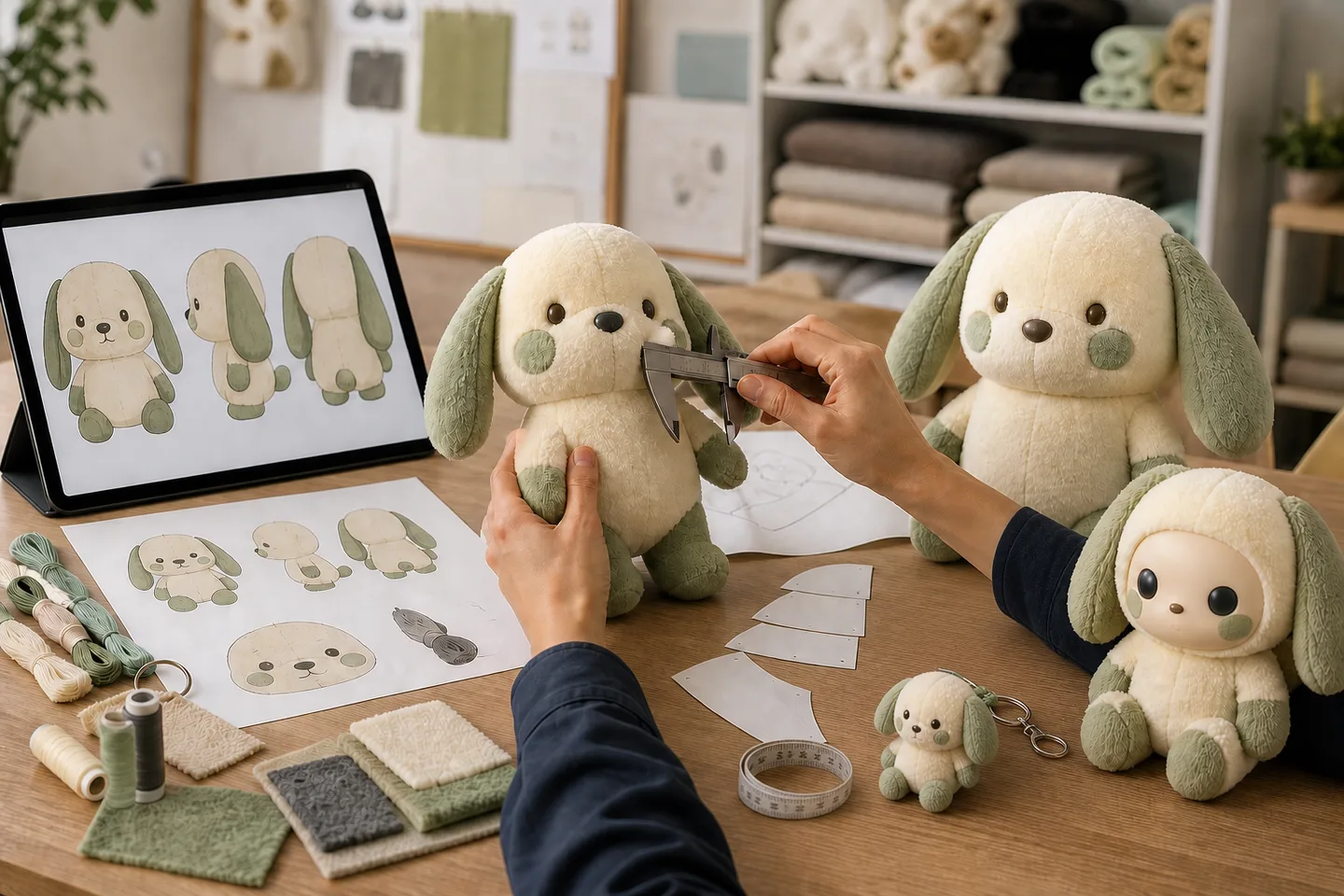
Custom plush toys from drawings rarely begin with a perfect production file. Many projects now start with one AI-generated image, a character illustration or even a rough idea. The image may look finished on screen, but the side view, back, seams, material, size and attachment method are still unknown. If those decisions are left to guesswork, the first physical sample can look like a different character.
The solution is not to ask a factory to “copy the picture exactly”. It is to identify what makes the character recognisable, translate those features into manufacturable decisions and confirm them in the right order. That same process can also turn one character into a coherent family of plush toys, bag charms, vinyl-face plush, mascots and branded gifts.
1. Why an AI character image is not yet a production specification
AI artwork is excellent for exploring mood, color and character direction, but one attractive view cannot answer every production question. The left and right sides may be inconsistent. A bow, tail or ear may change between images. Fine highlights can look like embroidery even though they depend on light. Hair or clothing may merge into the body in a way that cannot be sewn.
A pattern maker must still decide the three-dimensional volume, seam lines, fabric direction, stuffing, balance and assembly order. Before sampling, the team should separate visual inspiration from confirmed product requirements.
2. What high fidelity actually means
High fidelity does not mean reproducing every pixel. It means preserving the features people use to recognise the character: silhouette, head-to-body ratio, face spacing, expression, color blocks, ear or hairstyle shape, pose and one or two signature accessories.
Some details may need a different production method to look faithful in real life. A painted highlight may become embroidery. A floating strand may become an appliqué or a controlled fabric piece. The best result keeps the character’s identity while making the product stable, safe and repeatable.
3. Audit the character design before sampling
First compare every available image and mark contradictions. Which version of the eyes, ears, tail and costume is final? Which colors are intentional rather than lighting effects? What must remain unchanged, and where can the sampling team adjust the structure?
The buyer should also confirm that the character artwork and commercial use are properly authorised. This is especially important when an image was created with generative tools or contains references to an existing style. A clean design decision and clear usage rights reduce avoidable problems later.
4. Build a reference pack the factory can use
A useful starting pack does not need to be complicated. It should include the clearest front view, side and back references if available, target height, intended use, target market, quantity range and desired product form. Add close-ups for the face, important accessories and color details.
Mark the character’s three to five non-negotiable features. If only one image exists, ask the development team to create or confirm the missing views before cutting fabric. A simple annotated sheet is more useful than dozens of conflicting mood images.
5. Choose the right product form for the character
The same design should not be scaled down blindly. A medium plush can carry more sewing and embroidery detail. A small plush keychain or bag charm needs a stronger top loop, simplified shapes and accessories that will not snag. A vinyl-face plush can preserve a smooth sculpted expression while the body remains soft. A mascot or corporate gift may need clothing, packaging or brand-specific colors.
Selecting the form early helps the factory protect the important features instead of forcing one construction into every size.
6. Translate visual details into manufacturing decisions
Every important visual feature needs a production answer. Fabric choice affects softness, edge definition and how much embroidery remains visible. Embroidery, print and appliqué create different expressions. Seam placement controls volume. Stuffing changes pose and hand feel. A keychain needs a sewn-in fabric loop and suitable hardware; a molded face needs a reliable connection to the plush body.
This translation is where an experienced sampling team adds value. The goal is not only to make the artwork possible, but to choose methods that can be repeated in production.
7. Confirm the sample in the right sequence
- Silhouette and proportion: confirm the head, body, limbs, ears and sitting or standing balance.
- Face and expression: review eye spacing, muzzle volume, embroidery or molded details.
- Material and color: confirm pile, hand feel, color blocks and direction under real light.
- Accessories and attachment: check clothing fit, loops, hardware, removable parts and repeatable positioning.
- Final reference: approve one physical sample and record the decisions needed for production.
Correcting the silhouette before small decoration prevents expensive revision loops. Consolidated comments and marked photographs also keep the buyer, designer and factory working from the same version.
8. Turn one character into a coherent product family
Once the character language is confirmed, the development work can support more than one SKU. A core plush may lead to a smaller bag charm, a vinyl-face collectible, a seasonal costume, a mascot gift or an interactive version. The face, color palette and signature details stay consistent while the construction changes for each use.
This approach gives brands more ways to test price points, retail channels and campaign ideas without redesigning the character from zero. It also makes a collection feel intentional rather than like unrelated products.
9. What the buyer gains from a structured development process
A clear concept-to-product process reduces blind sample revisions, makes internal approval easier and reveals manufacturing risks earlier. It also gives buyers a more realistic view of which details can be retained, which should be simplified and how the design can support future products.
For licensing teams, artists, brands and campaign managers, the practical benefit is a product that looks recognisable, can be produced consistently and has room to grow into a wider merchandise range.
10. How MofuDream supports drawing-to-product development
MofuDream combines toy manufacturing experience since 2007 with a design and sampling team of more than 50 people. We can support design review, pattern and structure development, material selection, high-fidelity sampling, process optimisation, production management and packaging coordination. Our manufacturing system includes four production bases, more than 2,000 team members, over 1,000 pieces of equipment and monthly capacity above 900,000 units.
Explore our custom plush development capabilities and take a virtual look at our plush toy factory. If you are comparing suppliers, read how to choose a custom plush toy manufacturer. If your concern is revision control, see our guide to custom plush samples and bulk-production consistency.
Frequently asked questions
Is one AI image enough to start?
It is enough for an initial evaluation, but not always enough to cut a reliable sample. The development team will normally need to clarify the missing side, back, size, pose, material and priority features.
Can every AI-generated detail be reproduced exactly?
Not always in the same medium. Some visual effects need to be translated into embroidery, print, appliqué, molded parts or simplified construction. The aim is to preserve the character identity and intended effect.
Can the same character become several product forms?
Yes. A confirmed character system can be adapted into plush toys, keychains, bag charms, vinyl-face plush, mascots, gifts and interactive products, with construction adjusted for each size and use.
What should I send MofuDream first?
Send your clearest artwork, target product form and size, expected quantity range, market, timing and the features that must look right. We can then identify the missing information and recommend a practical next step.
Send your character design for a project evaluation. We will review the intended product, key visual features and suitable development route before sampling.